

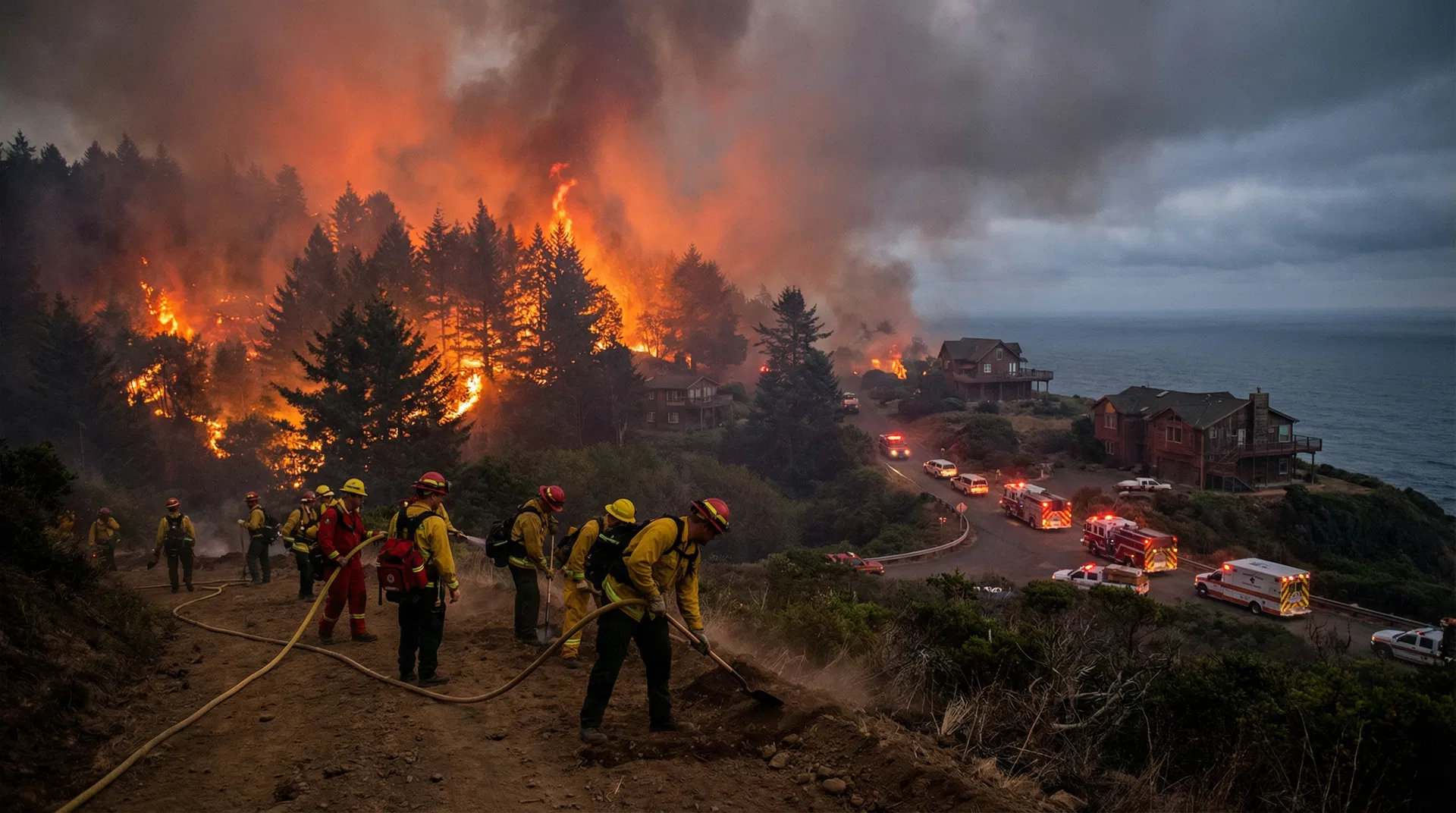

The Oregon Coast is known for its lush, wet forests — but in recent years, wildfire has become an increasingly serious threat to coastal communities. The 2020 Labor Day fires burned across large swaths of the Oregon Coast Range, destroying homes and forcing evacuations in communities from Lincoln City to Brookings. As wildfire risk increases, insurance carriers are responding by raising rates, tightening underwriting standards, and in some cases, non-renewing policies in high-risk areas. Here is what Oregon Coast homeowners need to know about wildfire insurance.
Non-Renewals Are Rising in High-Risk Areas
Insurance carriers are increasingly non-renewing homeowner's policies in areas with high wildfire risk. If you receive a non-renewal notice, do not wait — contact Gerald Ross Agency immediately. As an independent agent, we work with multiple carriers and can often find alternative coverage even for high-risk properties.
Oregon's Wildfire Risk Map and What It Means for Insurance
Oregon's Department of Forestry has developed a wildfire risk map that classifies properties across the state by wildfire risk level — Low, Moderate, High, and Extreme. Properties in High and Extreme risk areas face the greatest insurance challenges, including higher premiums, more restrictive underwriting, and a higher likelihood of non-renewal.
On the Oregon Coast, wildfire risk varies significantly by location. Coastal communities directly on the ocean generally have lower risk due to the moderating effect of the marine climate. But communities in the coastal foothills and adjacent to the Coast Range — including parts of Brookings, Gold Beach, and other communities — can have significant wildfire risk. You can check your property's wildfire risk classification at the Oregon Department of Forestry website.
How to Reduce Your Wildfire Insurance Risk
- Create Defensible Space: Clear vegetation within 30 feet of your home (Zone 1) and reduce fuel density within 100 feet (Zone 2). This is the single most effective step you can take to reduce your wildfire risk and may qualify you for insurance discounts.
- Harden Your Home: Install ember-resistant vents, replace wood shake roofing with Class A fire-resistant materials, use fire-resistant siding, and screen openings under decks and porches. Oregon's R327 building code requires these measures for new construction in high-risk areas.
- Maintain Your Property: Keep gutters clean of debris, remove dead vegetation, and maintain your defensible space regularly. Insurance carriers may inspect properties in high-risk areas and may non-renew policies that do not meet their standards.
- Document Your Mitigation Efforts: Keep records of your defensible space work and home hardening improvements. Some carriers offer discounts for documented mitigation efforts, and documentation is valuable if you need to dispute a non-renewal.
What to Do If You Receive a Non-Renewal Notice
If you receive a non-renewal notice from your insurance carrier, do not panic — but do act quickly. Oregon law requires insurance carriers to provide at least 30 days' notice before non-renewing a policy (60 days for policies in effect more than one year). This gives you time to find alternative coverage.
As an independent insurance agency, Gerald Ross Agency works with multiple carriers and can often find alternative coverage for high-risk properties. We also work with surplus lines carriers who specialize in hard-to-insure properties. If your standard carrier non-renews your policy, contact us immediately — we will work to find you a solution. We serve homeowners throughout the Oregon Coast including Brookings, Gold Beach, Bandon, and Coos Bay.
Received a Non-Renewal? We Can Help.
Gerald Ross Agency works with multiple carriers to find wildfire insurance solutions for Oregon Coast homeowners. Contact us immediately if you've received a non-renewal notice.